Rose Tattoo Designs — Find Your Perfect Rose Tattoo

Rose tattoo designs have been one of the most requested motifs in tattoo culture for over a century. Whether you want a bold traditional American rose, a delicate single-line outline, or a photorealistic bloom with lifelike shading, the rose adapts to virtually every tattoo style and body placement. Its enduring popularity comes from a rich blend of beauty and symbolism — love, grief, rebirth, and strength all wrapped in a single flower. Below you will find curated styles, placement ideas, meanings, and an AI generator pre-loaded with rose prompts so you can create your own custom rose tattoo design in seconds.

Most Popular Rose Tattoo Styles

Roses translate beautifully across every major tattoo style. Here are the most requested variations our users generate.

Minimalist Single-Line Rose

A continuous line traces the curves of petals and stem without lifting. This elegant approach emphasizes simplicity and works perfectly at small scales — wrist, ankle, or behind the ear. Single-line rose tattoo designs age well because the line weight is consistent.

Realistic Rose with Shading

Photo-realistic rose tattoo designs require a skilled artist who can render soft gradients, dewdrops, and petal texture. They look best at medium-to-large sizes on the forearm, thigh, or upper arm where the skin provides a flat canvas for detail work.

Traditional American Rose

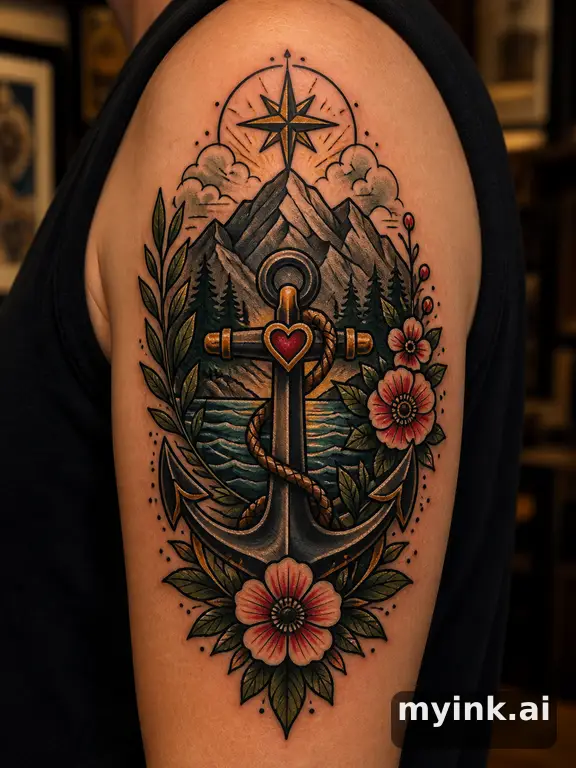
Bold black outlines, a limited palette of red, yellow, and green, and iconic shading define the classic American rose tattoo. This style has roots in sailor-era flash sheets and remains one of the most timeless rose tattoo designs available.

Watercolor Rose

Soft color bleeds and splashes without hard outlines give watercolor rose tattoos a painterly quality. These designs stand out for their artistic look but may require touch-ups over time as soft edges can spread.

Geometric Rose

Combining organic petal shapes with geometric frames — triangles, hexagons, or sacred geometry — creates a striking contrast. Geometric rose tattoo designs appeal to those who want nature meets mathematics.

Rose Tattoo Ideas by Placement

Rose Tattoos for Forearm and Wrist

The forearm is the most popular placement for rose tattoo designs because it offers visibility and a long canvas for stems and leaves. Wrist roses work best as small, minimal outlines. Both areas have moderate pain levels, making them great for first-timers.

Rose Tattoos for Shoulder and Back

Shoulders allow medium roses to wrap naturally around the deltoid. Back placements — especially the upper back or between the shoulder blades — suit larger, more detailed rose compositions with thorns, vines, or accompanying text.

Small Rose Tattoos for Finger and Ankle

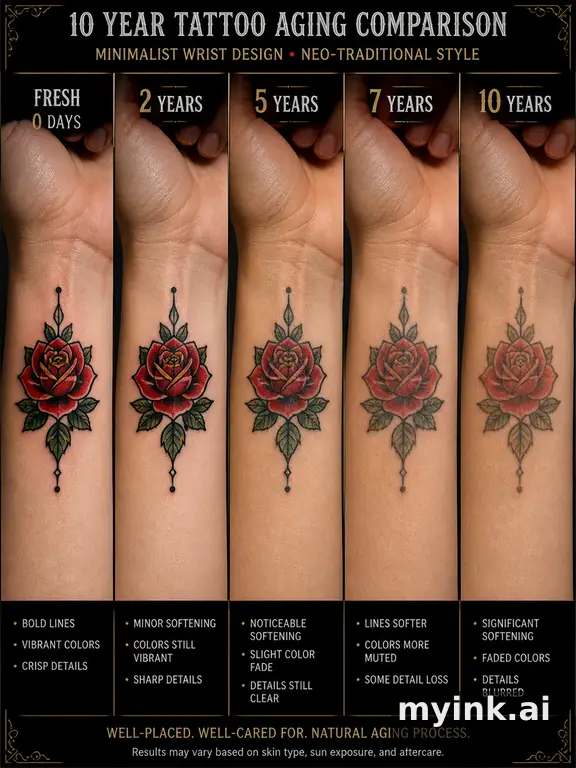
Finger roses are trending but fade faster due to skin wear and sun exposure. Ankle roses offer a delicate, feminine look. Both placements suit minimal line art — avoid heavy shading at this scale.

Rose Tattoo Meanings and Symbolism

Red Rose — Love and Passion

The classic red rose tattoo symbolizes romantic love, desire, and devotion. It is the most commonly requested color for rose tattoo designs and pairs well with names, hearts, or matching couple pieces.

Black Rose — Grief and Farewell

A black rose tattoo often represents loss, mourning, or the end of a chapter. It carries a gothic elegance and is popular in blackwork and dark-art styles.

White Rose — Innocence and New Beginnings

White roses symbolize purity, new starts, and remembrance. In tattoo form, they are typically rendered in fine-line greyscale to suggest whiteness against skin.

Rose with Thorns — Beauty and Pain

Adding thorns to a rose tattoo design communicates that beauty comes with sacrifice. This combination is a classic symbol of resilience — the thorn protects the bloom.

Rose Combined with Other Elements

Roses pair naturally with dozens of other tattoo motifs. Popular combinations include:

  • Rose and Skull: Represents the duality of life and death — a favorite in neo-traditional and chicano styles.
  • Rose and Cross: Blends faith with beauty. Common in memorial tattoos for loved ones.
  • Rose and Butterfly: Symbolizes transformation and femininity. Works well in watercolor style.
  • Rose with Name: A timeless way to honor a person. Script wraps around or beneath the bloom.
  • Rose and Clock: Represents the passage of time and fleeting beauty.

Generate Your Custom Rose Tattoo with AI

Describe your idea below — we have pre-loaded a prompt to get you started. Choose a style and generate your design in seconds.

Rose Tattoo Inspiration Gallery

AI-generated rose tattoo designs across multiple styles. Click any design for details.

Rose Tattoo FAQ

How much does a rose tattoo cost?
A small minimalist rose starts around $80-150. Medium-sized realistic roses typically cost $200-500. Large, detailed pieces with color can range from $500-1,500+. Prices vary by artist experience and location.
Do rose tattoos age well?
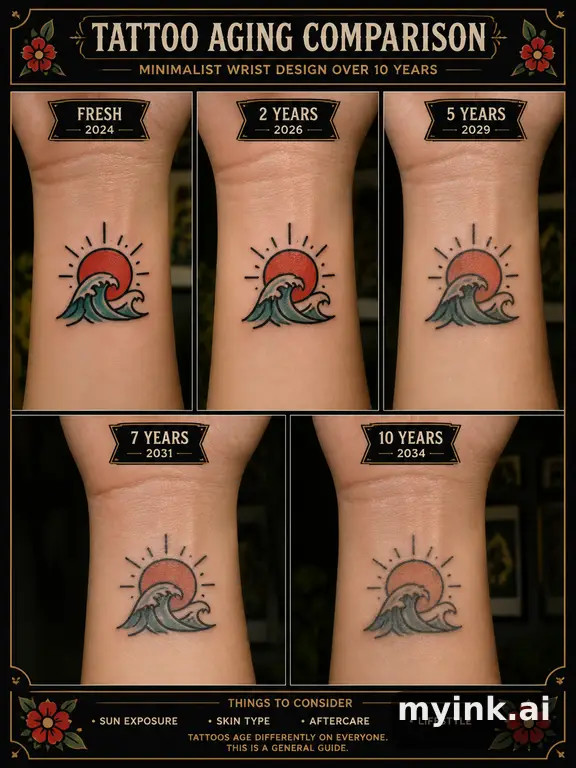
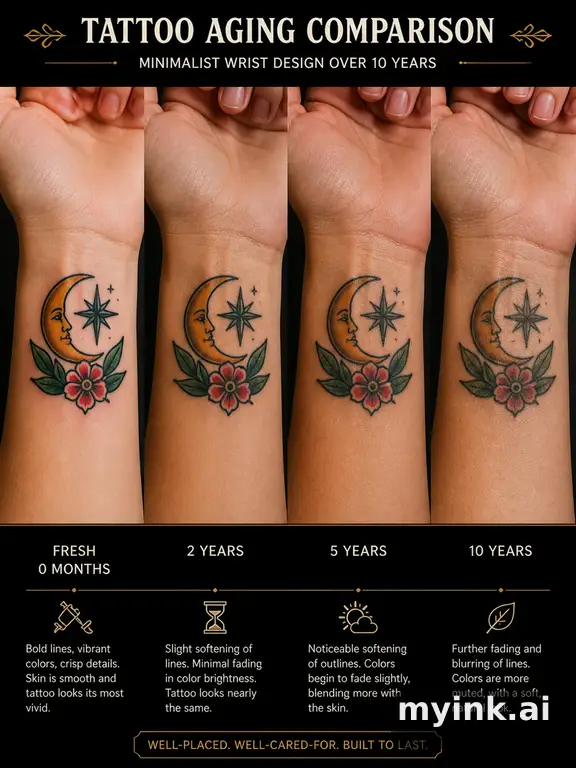
Traditional and neo-traditional roses with bold outlines age best. Fine-line roses may need touch-ups after 5-10 years. Sun protection is key — UV exposure is the number one cause of tattoo fading regardless of style.
What is the best placement for a first rose tattoo?
The inner forearm and upper arm are ideal — low pain, good visibility, and enough space for detail. Avoid fingers and ribs for your first tattoo as they are more painful and fade faster.
Can I customize the rose design with AI?
Yes! Our AI tattoo generator lets you describe your ideal rose and choose from 10 styles. Try prompts like 'minimalist single-line rose' or 'realistic red rose with thorns' to see instant results.
What does a rose tattoo symbolize?
Roses carry layered meanings: red for love, black for grief, white for innocence, yellow for friendship. Adding thorns suggests resilience, while pairing with other elements like skulls or clocks adds further symbolism.

Create Your Perfect Rose Tattoo

Start with 3 free AI-generated designs. Preview on your body before your appointment.

How to Use an AI Tattoo Preview Before You Book

MyInk is most useful when the output is treated as a planning reference, not a finished tattoo appointment file. Start with the idea you want to test, choose a style that has a real tattoo tradition behind it, then review whether the design can survive on skin at the size and placement you have in mind.

A strong tattoo preview should have one clear subject, readable contrast, and enough negative space for the design to age. Tiny lettering, hairline detail, crowded symbols, soft watercolor edges, and low-contrast color combinations can look beautiful on screen while becoming hard to read after healing and years of sun exposure.

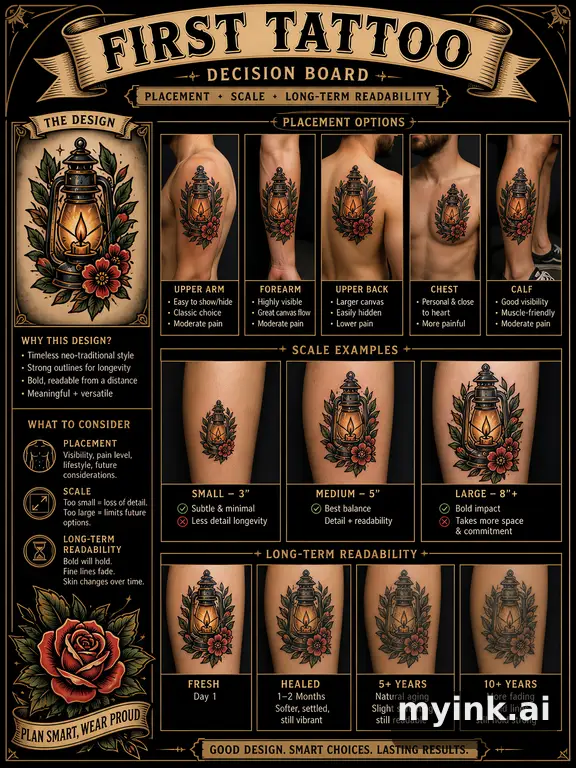
Placement changes the design. A forearm can carry vertical compositions and readable symbols. Ribs and chest placements need more attention to pain, breathing movement, and body curvature. Fingers, hands, and wrists fade faster because the skin moves, washes, and rubs more often. The preview should help you see those tradeoffs before you pay a deposit.

Use the generator to create directions, then narrow to one or two realistic options. Save the prompt, style, placement, and reference image. That record gives your artist a clearer starting point than a folder of unrelated screenshots and helps prevent last-minute design confusion at the consultation.

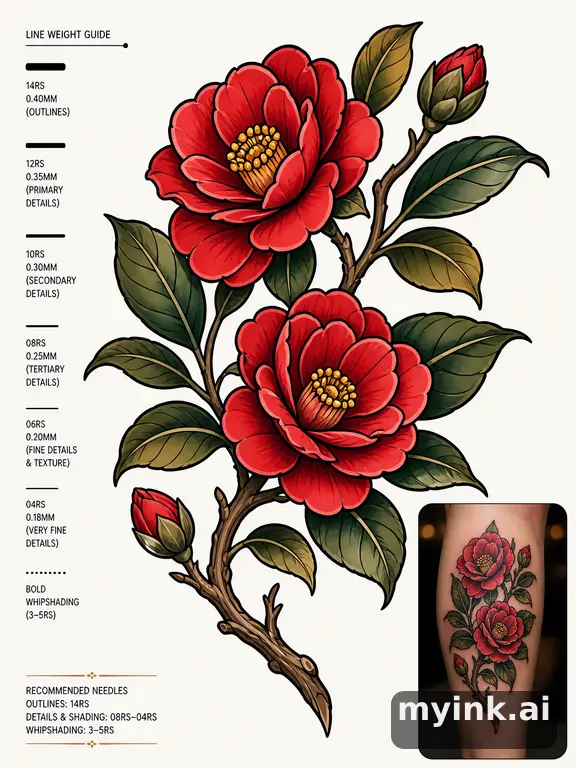
An artist still needs to redraw, resize, and adapt the concept. Tattooing is not the same as printing an image on skin. Line weight, stencil clarity, needle grouping, skin tone, body movement, and healing all affect the final result. Treat any AI image as a brief for discussion, not a file to copy without judgment.

Be especially careful with memorial, cultural, religious, medical, or partner-name tattoo ideas. Those designs carry meaning beyond aesthetics, so the right workflow includes a pause: check the spelling, symbolism, cultural context, and long-term emotional fit before turning a preview into a permanent mark.

If a page only gives you a pretty image, it has not answered the important question. A useful tattoo planning page should explain who the idea suits, where it works, what might age poorly, what to ask an artist, and when a safer variation would be smarter.

Before booking, compare the design at phone size, full screen, and roughly the real size on your body. If the main shape disappears when small, simplify it. If the design relies on fragile detail, make it larger or choose a bolder style. If the meaning feels unclear, revise the concept before you involve an artist.

Best fit

Early tattoo ideation, style comparison, placement preview, cover-up exploration, memorial concept drafting, and preparing a clearer brief for an artist.

Poor fit

Copying another artist's work, replacing professional stencil preparation, guessing cultural meaning, or choosing a permanent tattoo from a single unreviewed image.

Before using

Check meaning, size, placement, contrast, aging risk, spelling, artist feasibility, and whether the design still feels right after a short waiting period.

Tattoo Planning Checklist

Decide the role of the tattoo first. A decorative piece can be judged by visual strength, fit, and longevity. A memorial or symbolic piece needs a second layer of review: spelling, dates, cultural meaning, emotional timing, and whether the symbol will still feel right when the current life moment has changed.

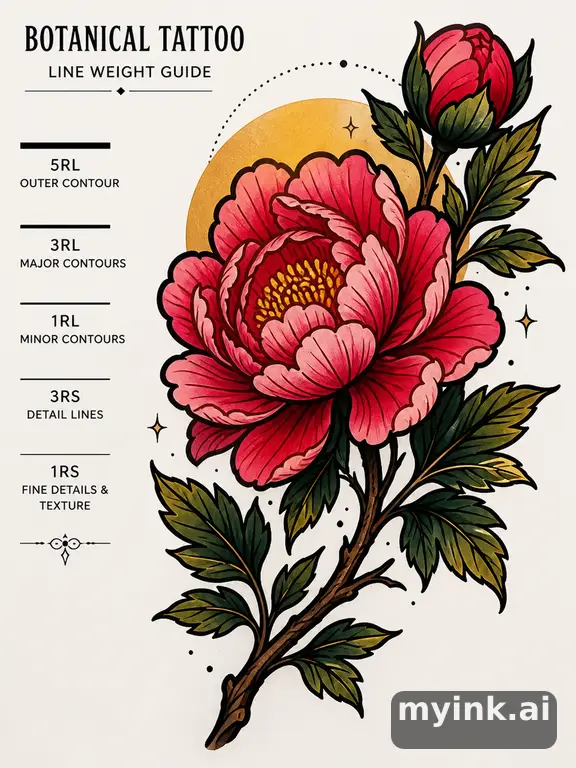
Check the design at real size. A beautiful full-screen image can fail when reduced to a three-inch wrist tattoo. If the subject, lettering, or secondary symbols become hard to read at actual size, the concept needs fewer details, heavier line weight, more open spacing, or a larger placement.

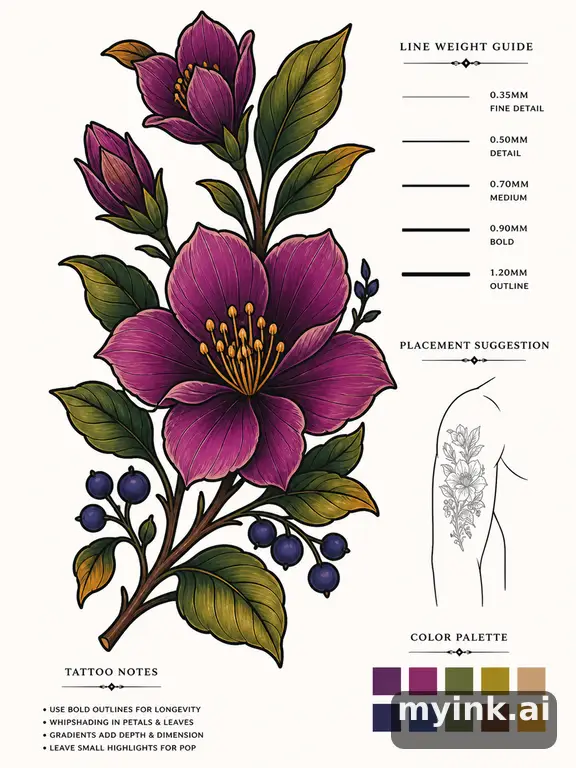
Compare the style with the body area. Traditional, blackwork, and neo-traditional designs usually tolerate aging better because they use stronger outlines and contrast. Fine-line, watercolor, and tiny geometric pieces can be excellent, but they need careful artist selection, realistic sizing, and acceptance that touch-ups may be part of ownership.

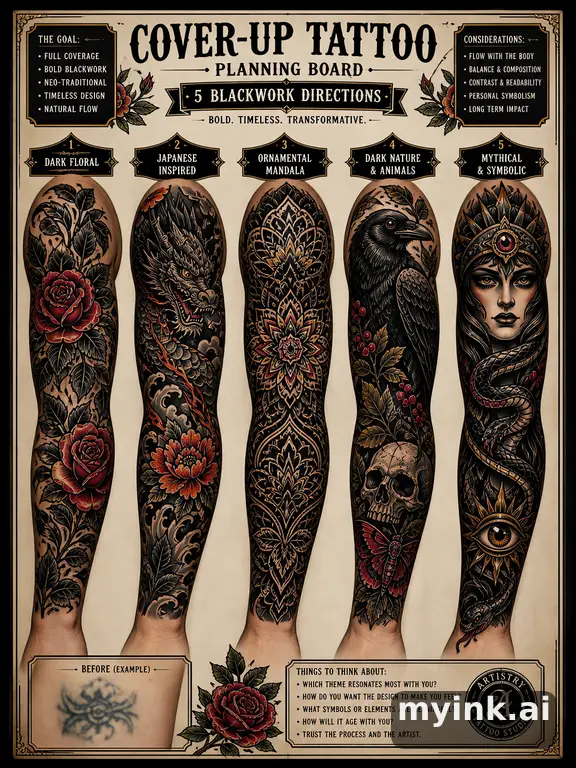
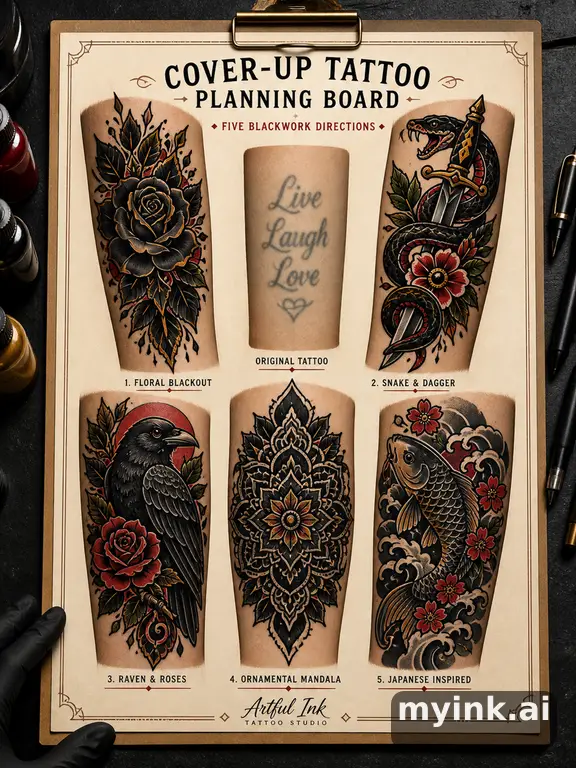
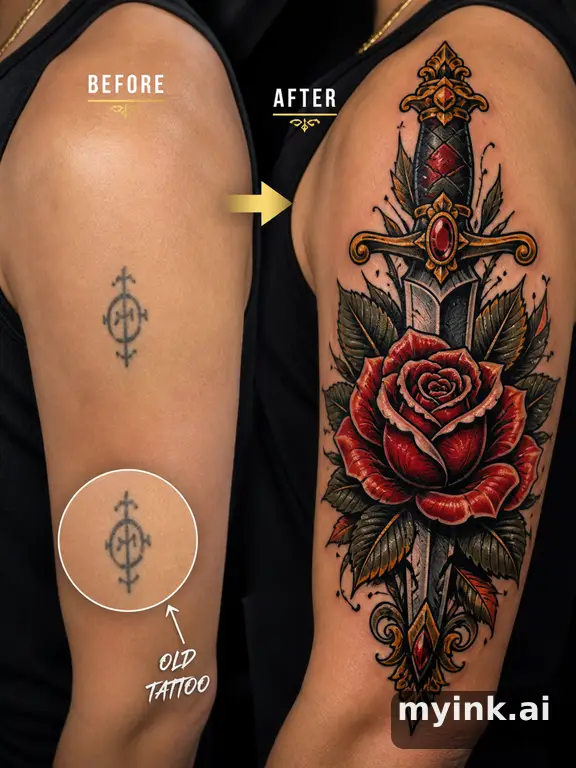
If you are planning a cover-up, be even more conservative. A cover-up has to solve the old tattoo's darkness, shape, and location before it can become a new design. The AI preview can help explore directions, but a cover-up artist must judge what is possible on the existing skin.

Use try-on previews to test placement honestly. Rotate, scale, and compare the idea on the intended body part. A design that looks balanced on a flat screen may distort around elbows, ribs, wrists, shoulders, knees, or fingers. The goal is not a perfect simulation; the goal is catching obvious placement mistakes early.

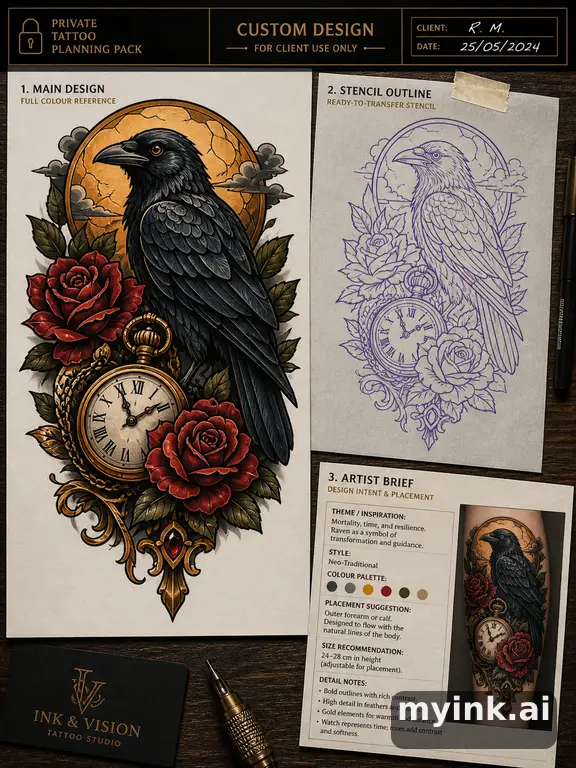
Before sending anything to an artist, write a short brief: subject, style, placement, approximate size, meaning, colors to use or avoid, and any symbols that must stay out. Add one or two generated references, not twenty. A tight brief gives the artist space to create original work while preserving your intent.

Avoid treating a generated image as proof that a tattoo is safe, culturally appropriate, or technically ready. Ask a professional about stencil clarity, line weight, skin tone, placement movement, and healing. The better the AI-assisted planning, the easier that expert conversation becomes.

If the design still feels right after a short waiting period, the next step is a real consultation. If it stops feeling right, that is a useful result too. The safest tattoo planning workflow helps you avoid weak ideas as much as it helps you find strong ones.

What Makes a Preview Useful

A useful preview answers a specific decision question. On an aging page, the question is whether contrast and line weight will survive. On a meaning page, the question is whether the symbol says the right thing without becoming too crowded. On a cover-up page, the question is whether the new design can realistically hide the old shape. On a pack page, the question is whether the concept is ready for an artist handoff.

The best pages therefore combine image exploration with judgment. They explain what the design is good for, where it may fail, what to ask an artist, and which details should be simplified before the tattoo becomes permanent. This is the difference between browsing tattoo images and actually preparing for a safer appointment.

If the output feels close, do not keep generating randomly. Change one variable at a time: style, placement, size, subject, color, or amount of detail. Comparing focused variations helps you see which part of the idea is strong and which part is creating risk.

A tattoo preview should also make refusal easier. If the design looks wrong on the body, feels too tied to a temporary emotion, depends on detail that will not age, or needs a placement you are not comfortable wearing, stop there. Avoiding the wrong tattoo is a successful planning outcome.

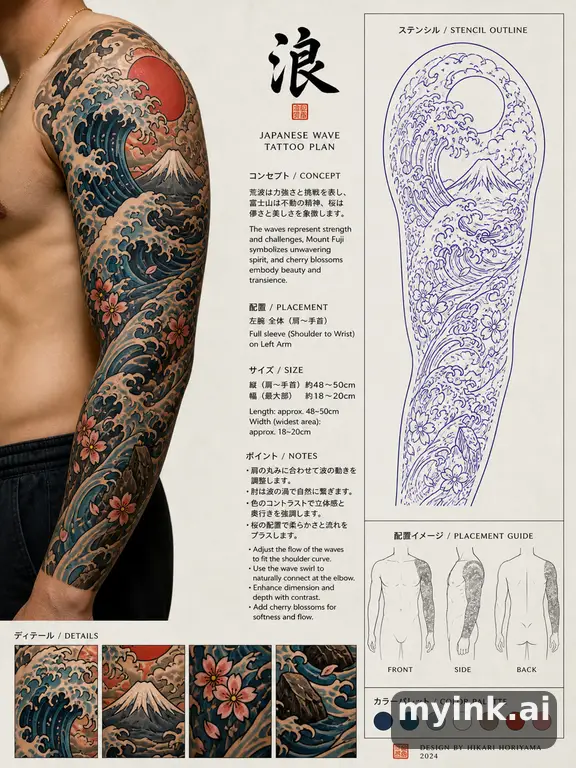
Pack and sample pages should be judged by handoff quality. A useful pack explains the concept, shows the intended style, gives the artist enough context, and leaves room for the artist to redraw instead of forcing a copied AI image. If the handoff would confuse a professional, the design is not ready yet.

Guide pages should help with the questions that sit around the image: what to prepare before a first tattoo, how to think about aftercare, when numbing cream needs artist approval, and how to avoid using pain or urgency as the only decision filter.

Sample pack pages should be especially concrete. They need to show what the buyer receives, how the files support an appointment, what still needs artist review, and when a user should keep refining before purchasing a handoff pack.

When a page helps someone ask a better question before the needle touches skin, it has done real work for both searchers and future clients.

That is why the planning pages emphasize clear briefs, readable designs, realistic sizing, and artist review instead of treating image generation as the final step.

If a sample cannot explain that handoff clearly, it should be revised before purchase.

Clear handoffs reduce appointment friction.

They also reduce revision waste later.