Cover-Up Tattoo Planning: Rules, Sizing, Preview
Planning a cover-up starts with the tattoo already on your skin, the area you are willing to change, and the design you would like to wear. A fixed size multiplier cannot establish whether a cover-up is feasible. An AI image also cannot test how new pigment will look over existing ink once healed. Use this guide to prepare concrete questions for an experienced cover-up artist.
For background, see this studio discussion of cover-up problems and the FDA’s tattoo safety information. Studio examples are individual experiences, rather than measurements that predict your result.
Size: Assess the Existing Tattoo Before Setting a Footprint
Some online guides, including AI for Tattoo and Gravity Tattoo, discuss expanding the design. Treat such examples as starting points for a consultation, not a formula for your skin.
Bring the following information:
- Faded or thin line work: Show which marks are still visible and which you want hidden or incorporated.
- Intact outlines and medium-density areas: Ask the artist to map these against a proposed composition, rather than choosing a new image by its outside dimensions alone.
- Solid black or saturated color: Ask what can realistically be changed, which areas may remain visible, and whether a different design or a medical consultation about lightening is appropriate.
If an old wrist name measures 3 inches, record that measurement and the maximum area you are willing to tattoo. Do not assume it requires a particular 5- or 6-inch replacement. Ask the artist to show the proposed footprint on your body, especially where fingers, wrists, or ankles leave limited room to expand.
Contrast and Composition: Questions for the Artist
Dark shapes, lighter areas, detail, and negative space are useful things to discuss when comparing compositions. They are not a pigment-application recipe or proof that a design will conceal the old tattoo.
Ivan Panayotov’s external tutorial below shows one creator’s cover-up process. It is an individual example, not a guarantee that the same approach will suit another tattoo:
Use the source video as a discussion reference. For your own consultation, ask:
- Existing marks: Which old lines or dense areas does the proposed design hide, incorporate, or leave visible?
- Contrast: How do the focal point, shading, and open areas relate to those marks? Can the artist show comparable healed work?
- Stencil and placement: Can you review the proposed position, boundaries, and alignment on your body before agreeing to the work?
Keep the artist’s assessment separate from what looks convincing in a fresh photograph or digital image.

Three Paths Compared: Direct Cover, Fade-Then-Cover, Rework
Ask how these options differ for your tattoo, budget, and desired result:
| Factor | Direct cover-up | Laser fade, then cover | Rework / blast-over |
|---|---|---|---|
| Aim | Discuss concealing the old design with new work | Discuss medical lightening before reassessing a cover-up | Discuss retaining or deliberately incorporating old elements |
| Size | Artist assesses the proposed footprint | Reassess with the artist after the treatment outcome is known | Agree which boundaries and elements can change |
| Color | Assess against the existing ink; no universal palette | Lightening does not guarantee a particular new color will work | Depends on the existing piece and the new composition |
| Time | Tattooing and healing plan agreed with the artist | Clinician assesses treatment count, intervals, risks, and recovery | Tattooing and healing plan agreed with the artist |
| Visibility | Old ink may remain visible | Lightening can be incomplete; complete removal may be impossible | Some old work is intentionally retained |
The FDA’s removal guidance explains that laser treatment can require repeated visits and may not remove a tattoo completely. It carries risks, including scarring, infection, and pigment changes. A clinician must assess the treatment plan; this article does not prescribe a session count, interval, or fading percentage. The Los Angeles Tattoo Shop discussion is another studio perspective, not a medical forecast.
For a recent tattoo, ask when the skin can safely be assessed for further work. Do not book another procedure from a universal waiting period in an online guide. If you have a concerning skin reaction, seek medical advice before arranging further tattooing.
Cover-Up Tattoo Simulation Before You Consult
Prepare references that make your preferences easy to discuss:
- Photograph the old tattoo clearly and record its actual measurements separately. A ruler in a photograph does not make an AI preview physically calibrated.
- Generate design ideas. MyInk’s AI tattoo generator can explore motifs and styles such as blackwork or neo-traditional. An approximate size in the form is a design preference, not a correctly scaled stencil or a coverage calculation.
- Preview placement. The try-on tool places a design on a body photo. Use it to compare visual composition and placement preferences; it cannot establish how pigment will cover an existing tattoo or heal on your skin.
- Bring the original and the preview. Ask the artist to assess the unedited tattoo, then explain which parts of the digital concept need to change. A convincing digital overlay is not a coverage test.
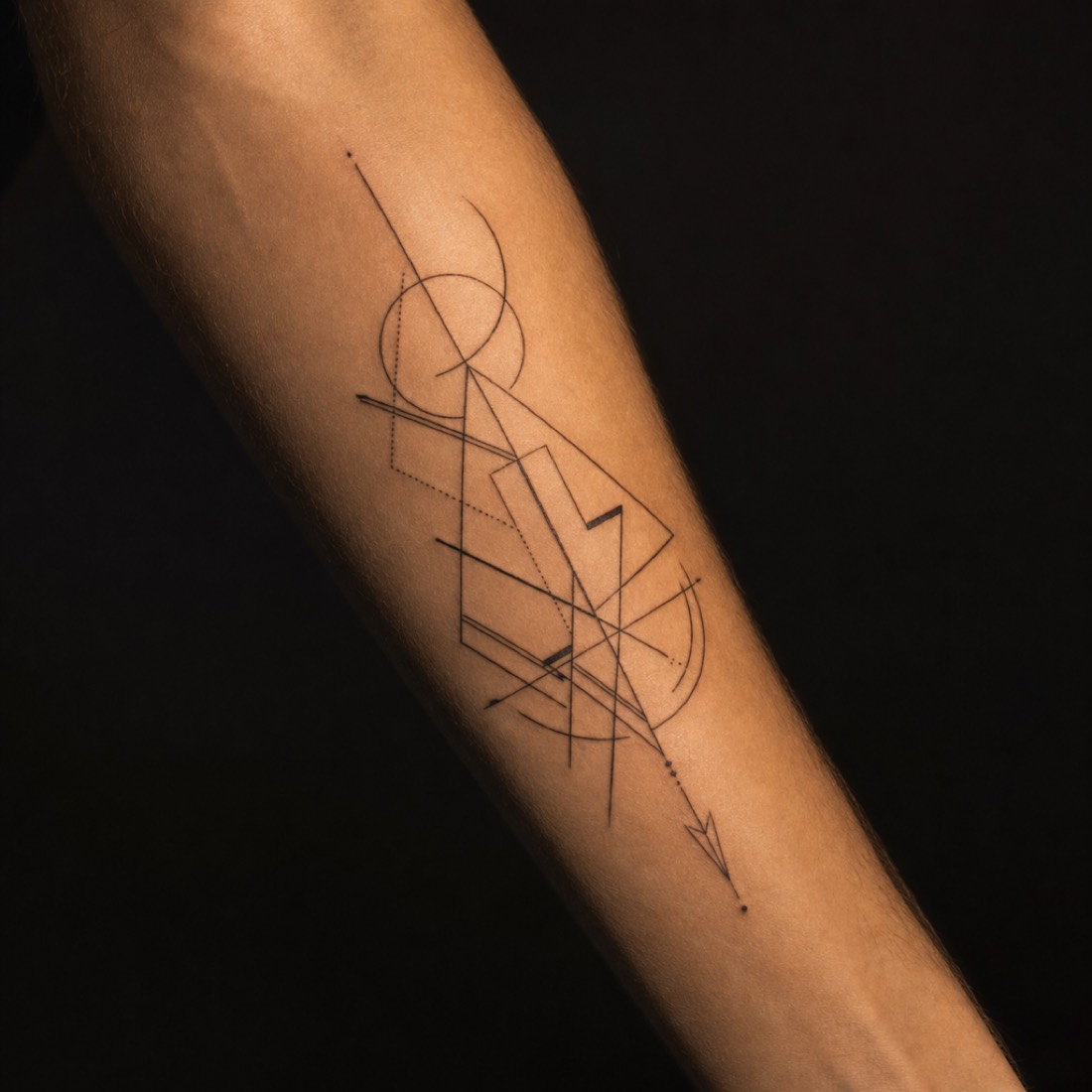
Bring two or three ideas you like, along with the old tattoo’s measurements and your limits on size or placement. These are consultation references. The artist still needs to assess feasibility, skin condition, and any scarring in person, and set the final design and physical size.
Questions to Resolve Before Booking
- Size: If the design stays within the existing footprint, ask how the old marks will be handled. If it expands, agree on the new boundaries.
- Style: If you prefer fine-line or watercolor, ask what compromises the existing tattoo may require rather than assuming a style name proves feasibility.
- Healed examples: Ask to see relevant healed work alongside fresh photographs, and discuss any visible remnants.
- Alternatives: Ask about reworking, incorporating old elements, changing the design, or seeking a medical lightening consultation. Laser treatment is not an automatic requirement.
- Existing colors: Ask the artist to assess the actual ink rather than relying on a universal rule about reds, oranges, or any other color.
If you are still weighing removal against covering, our cover-up vs laser removal breakdown goes deeper on cost and timeline trade-offs, and the cover-up salvage guide covers what to do when a previous cover-up itself needs fixing.
FAQ
How much bigger does a cover-up tattoo need to be? There is no universal multiplier. Bring the old tattoo’s measurements and ask the artist to show the proposed footprint and explain how it handles the existing marks.
Do I need laser removal before a cover-up? Not automatically. Discuss alternatives with a cover-up artist. If you consider lightening, a qualified healthcare professional should assess the risks, likely limitations, and treatment plan; no fixed session count or fading percentage applies to everyone.
Can I preview what a cover-up will look like? You can use a body-photo preview to compare visual placement and design preferences. It cannot predict pigment coverage, the healed result, or calibrated physical size. Bring it alongside an unedited photograph for the artist to assess.
What styles cover old ink best? Blackwork, black-and-grey realism, neo-traditional, botanical, and ornamental designs offer different compositions to discuss. A style alone does not establish coverage. Ask the artist which features suit the actual tattoo and which limitations remain.